Premature Hair Greying Homeopathy: Myths vs RealitiesPremature Hair Greying Facts
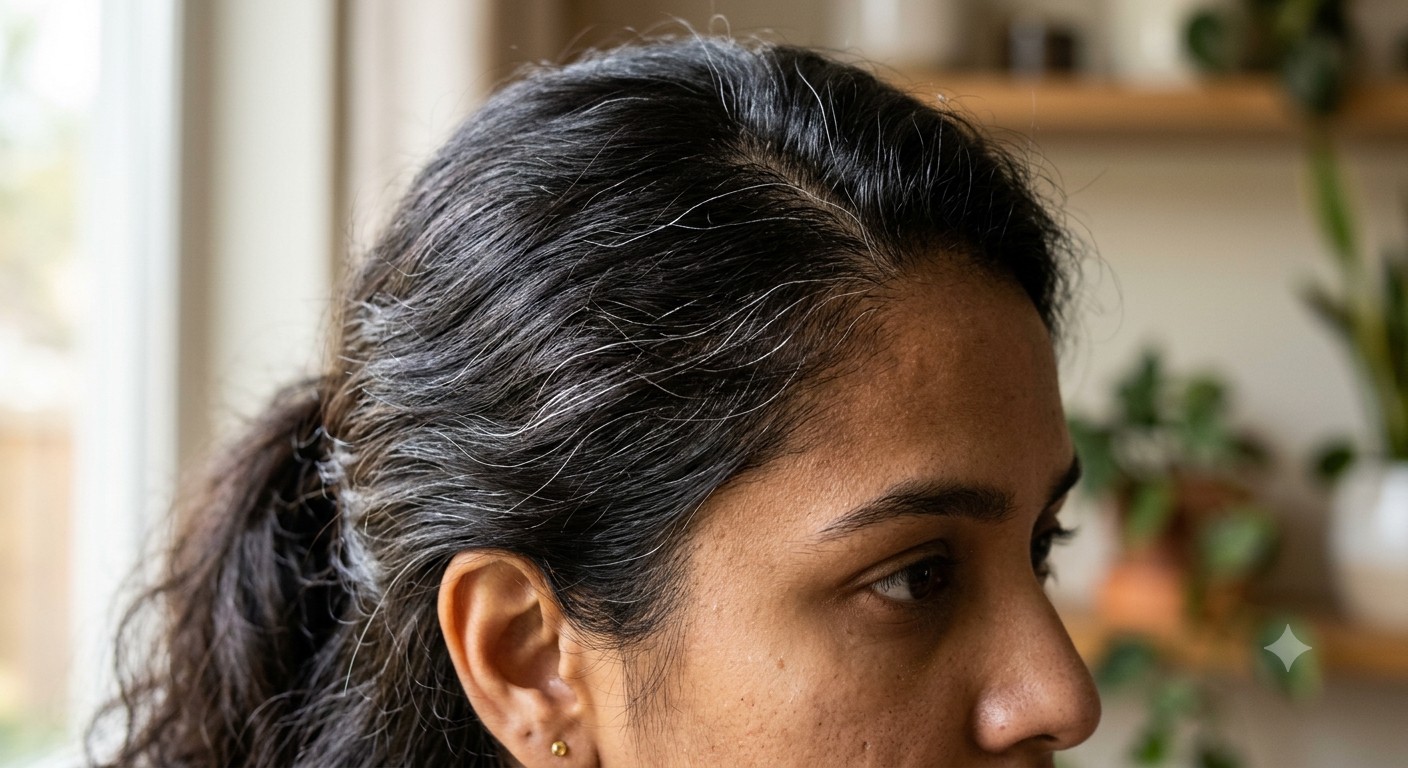
Finding your first strand of white hair in a bathroom mirror or during a quick routine check before leaving the house can feel surprisingly heavy. In your 20s or early 30s, a silver hair feels out of place—almost like a glitch in the timeline. You might immediately search your reflection, wonder if your friends have noticed, and start scrolling for solutions.
The internet is full of quick fixes promising pitch-black hair in two weeks, miracle oils, and claims that specific remedies act like internal hair dye. If you are exploring premature hair greying homeopathy options, you deserve clear, grounded facts rather than exaggerated marketing.
Here is what actually causes early greying, what science says about reversing white strands, where homeopathy realistically fits into hair care, and how to look after your scalp without wasting money on false promises.
What Premature Greying Actually Means in India
Hair greying is a standard part of biological maturation, but the timeline varies across ethnicities. In South Asian populations, greying is medically considered "premature" if it begins noticeably before the age of 25 to 30.
Hair gets its natural color from melanin, a pigment produced by specialized cells called melanocytes located inside your hair follicles. As long as melanocytes actively pump pigment into the growing shaft, your hair retains its natural shade. When these cells slow down pigment production or stop altogether due to oxidative stress, age, or genetics, the new hair shaft grows out translucent—appearing white or grey against dark Indian hair.
What Drives Premature Greying? (It Isn't Just "Too Much Shampoo")
When white hair appears early, people often blame their daily habit: switching shampoos, skipping oiling, or standing in hot showers. While harsh chemical treatments damage the hair shaft, they rarely turn the root grey on their own. The real drivers run deeper:
- Genetics and Family History: If your parents or grandparents developed silver hair in their mid-20s, your hair follicles likely carry the same genetic timer. Genetics remains the single strongest predictor of early greying.
- Vitamin and Mineral Deficiencies: Low levels of Vitamin B12, serum ferritin (iron stores), Vitamin D3, and folate directly impair follicle health and melanin synthesis. In India, Vitamin B12 deficiency is widespread due to dietary patterns, making it a frequent contributor to early greying.
- Thyroid Imbalances: Both an underactive thyroid (hypothyroidism) and an overactive thyroid (hyperthyroidism) affect cellular metabolism across the body, including pigment production in hair follicles.
- Chronic Stress and Oxidative Damage: Prolonged psychological stress triggers the release of stress hormones like norepinephrine, which can deplete the stem cell reservoir inside hair follicles that produces pigment.
- Smoking: Chemical toxins from tobacco smoke create systemic oxidative stress, constrict tiny capillaries feeding the scalp, and are strongly linked to greying before age 30.
- Excessive Heat and Bleaching: Repeated chemical bleaching, strong dyes, and high-heat styling tools break down protein bonds in the hair shaft and inflame the scalp, worsening overall hair quality.
Myths About Early Grey Hair You Can Ignore
Before spending money on creams or miracle cures, let us clear away a few persistent myths:
Myth 1: "Pluck one white hair, and ten will grow back."
Plucking a single strand only affects that specific follicle. Ten hairs will not grow back from one root. However, plucking can damage the hair follicle over time, leading to permanent scarring or thin patches. Leave the strand alone or carefully trim it with small scissors near the base.
Myth 2: "Oiling your hair every night turns grey hair black again."
Good hair oils nourish the scalp, reduce friction damage, and condition dry strands. However, oil applied topically to the external hair shaft cannot reactivate dead or dormant pigment cells inside the follicle root.
Myth 3: "Homeopathy will turn all grey hair back to black in 15 days."
No legitimate medical system—homeopathic, conventional, or otherwise—can magically re-pigment a hair shaft that has already grown out white. Claims promising overnight color restoration are deceptive marketing tactics.
Where Homeopathy Sits in Hair and Scalp Care
Homeopathy does not work like a synthetic dye or a localized color stamp. Instead, traditional homeopathic philosophy views early greying as a reflection of overall internal balance, nutritional absorption, stress levels, and constitution.
When considering premature hair greying homeopathy options, a qualified practitioner evaluates the whole person rather than just counting grey strands. Some remedies traditionally used in individualised homeopathic care pictures include:
- Lycopodium: Often considered when early greying is accompanied by digestive complaints, bloating, or premature fatigue.
- Phosphoric Acid: Traditionally selected for individuals experiencing physical weakness, grief, or early greying following significant emotional or physical stress.
- Silicea: Frequently used in constitutional care where hair is thin, brittle, and prone to breaking alongside weak nails.
- Psorinum: Sometimes evaluated in constitutional pictures involving sensitive, dry skin, chronic scalp irritation, or low vitality.
- Thyreoidinum: Used cautiously by practitioners when metabolic sluggishness or thyroid imbalance forms part of the underlying health profile.
It is crucial to understand that these remedies support overall constitutional well-being. They do not act as direct pigment injections, and existing grey shafts will generally not shift back to black.
Sensible Steps to Manage Early Greying
While you cannot rewrite your DNA, you can protect the healthy hair you have and support your scalp with a grounded daily routine:
- Get Essential Blood Work: Check your Vitamin B12, Vitamin D3, serum ferritin, and thyroid profile (TSH). Correcting an underlying nutritional deficiency can help protect remaining pigment-producing cells.
- Focus on a Dense Diet: Include lentils (dals), dark leafy greens, seeds, nuts, and dairy products like curd or paneer. If you eat meat or eggs, these provide direct sources of B12 and quality protein.
- Quit Smoking: Stopping smoking improves circulation to tiny scalp capillaries and reduces systemic oxidative damage.
- Use Gentle Scalp Products: Cleanse your hair with mild, balanced shampoos that preserve natural oils rather than stripping the scalp dry.
- Choose Safe Coverage Options: If white hair bothers you visually, opt for gentle, ammonia-free hair colors or vegetable-based dyes rather than harsh chemicals that weaken the hair shaft.

To support your routine with gentle scalp cleansers and nourishing oils, explore our Hair & Skin care collection on Kapsule.fit.
When to See a Doctor
While a few grey strands in your late 20s are completely normal, consult a dermatologist or physician if you notice:
- Sudden, rapid patchy loss of pigment across your hair or body (which may indicate conditions like vitiligo).
- Significant hair shedding or thinning accompanying white strands.
- Unexplained fatigue, rapid weight changes, or extreme sensitivity to cold or heat.
For additional reading on general wellness and hair maintenance, check out our guide on building a simple scalp care routine.
For a detailed medical overview of hair follicle pigmentation and premature canities, read this dermatology review on premature greying of hair.
Frequently Asked Questions
Can grey hair turn black again naturally?
Once an individual hair shaft grows out white because pigment production in that follicle has stopped, that specific strand almost never turns black naturally. However, if early greying was caused by a temporary nutritional deficiency (like severe Vitamin B12 deficiency), restoring normal vitamin levels may help future hair shafts grow with their natural color.
Does plucking a white hair cause more white hair to grow?
No, plucking a white hair does not spread greying to neighboring follicles. Every hair follicle operates independently. However, plucking can injure the follicle, leading to inflammation or permanent hair loss in that spot.
Can homeopathy reverse premature hair greying?
Homeopathy generally does not reverse hair shafts that have already turned grey or white. Instead, homeopathic care aims to support constitutional balance, manage stress, and address underlying vitality. This may help maintain overall hair health rather than restoring lost color.
Which vitamin deficiency causes early white hair?
Deficiencies in Vitamin B12, Vitamin D3, folate, and iron (ferritin) are commonly linked to premature hair greying in young adults.
Taking care of your hair is about consistency, health, and setting realistic expectations. Support your body from within, treat your scalp with care, and do not fall for miracle overnight fixes.